Hey!
Instead of giving you one massive wall of text, I thought an FAQ would be a much nicer way to tell you a little more about myself. So if there’s anything you’ve ever wanted to know about me, you’ll probably find it somewhere down here. :)
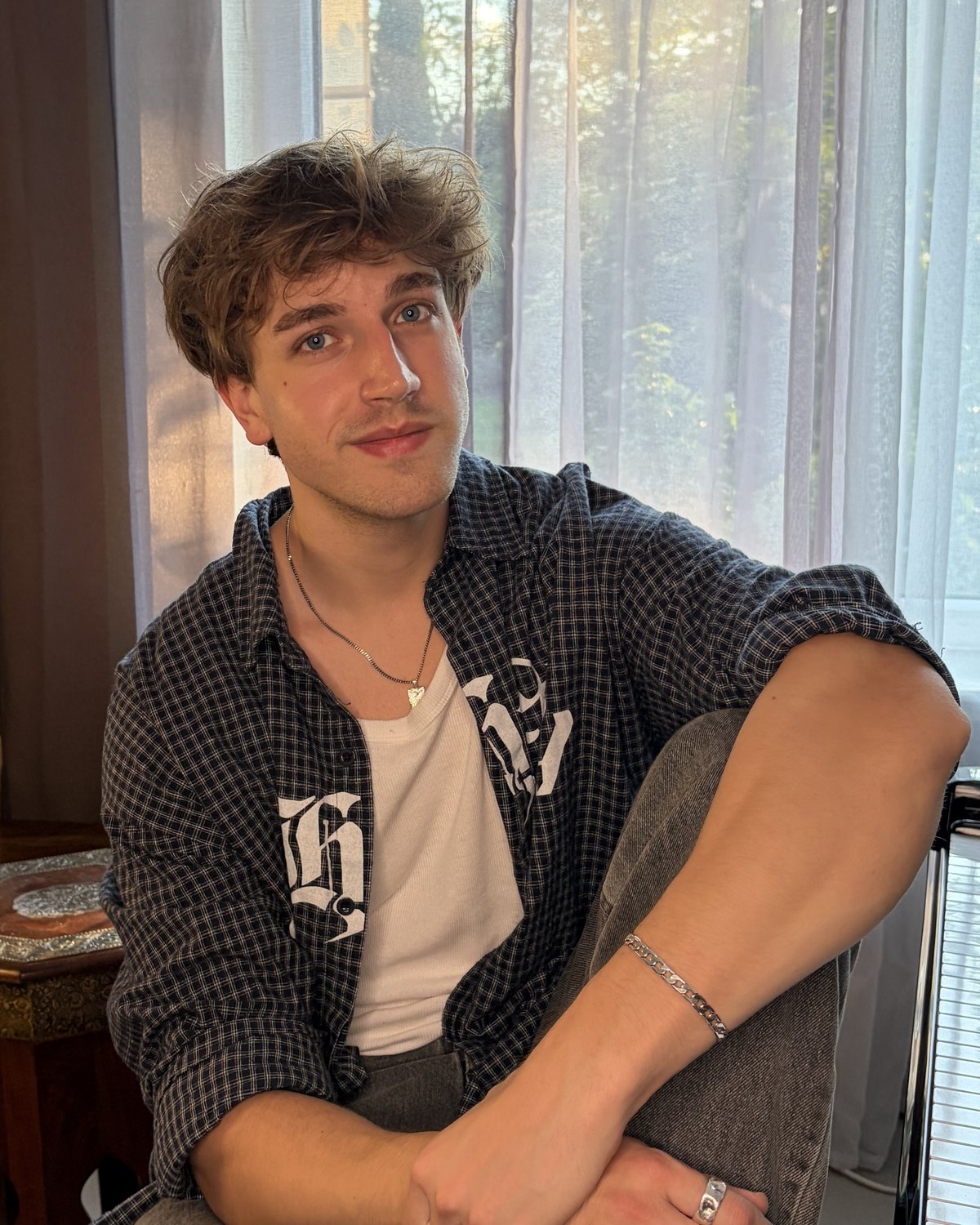
Can you introduce yourself? My name is Robert Kaminski, I’m 26 years old and I’m a pianist and content creator from Frankfurt am Main, Germany.
My path wasn’t always this clear, though. I originally wanted to become a graphic and motion designer. It wasn’t until I was 18 that I decided to follow my real passion and turn music into my career.
When I’m not practicing, composing or doing something else music-related, I love playing video games, working out, watching horror movies or a good anime like HxH or Monster. ...can you tell us about your journey? I started playing the piano when I was 8 years old, but I was by no means a prodigy.
When I was 18, I started taking piano more seriously and began writing my own arrangements of pop songs. You can actually still find all of them on Instagram. Through those covers, I slowly built an audience and started taking music more and more seriously.
Around that time, I also began taking singing lessons, recorded vocal covers and even wrote a few songs of my own.
When I was 21, I started studying classical piano with a professional Japanese concert pianist. Working with her completely changed the way I approached the instrument. My technique improved immensely, and I discovered how much I loved working on difficult études, beautiful ballades and learning music directly from the score.
That was quite new to me. I had learned how to read sheet music when I was younger, but for most of my life I mainly played by ear, improvised and spent hours just exploring the piano on my own. Improvisation has stayed a big part of my playing ever since.
More recently, I also started studying composition with a contemporary composer. That’s pretty much where I am today: diving deeper into music, developing my own voice as a composer and writing more of my own music. Why did you start playing piano? I started playing piano when I was 8 years old, inspired by a video game: Final Fantasy VIII.
Every time I played it with my older brother, I absolutely loved the soundtrack. When I found out that official solo piano scores existed for the music, I knew I had to learn how to play it myself. My biggest goal back then was to learn the Boss Battle Theme called "Force Your Way". After seven years, I finally did. ...who inspired you the most? Throughout my life, I’ve gone through a lot of different music and genres.
My first and probably biggest inspiration was Nobuo Uematsu, the composer behind the Final Fantasy soundtracks. Later, I also discovered composers like Joe Hisaishi, known for his music for Studio Ghibli films, and John Williams, who wrote the scores for movies such as Harry Potter.
During my teenage years, my taste shifted more toward pop, R&B and rap. Albums like Flow State by Tash Sultana, Starboy and Beauty Behind the Madness by The Weeknd, Case Study 01 by Daniel Caesar, and To Pimp a Butterfly by Kendrick Lamar had a big influence on me.
Later on, I started diving much deeper into classical piano through pieces like Chopin’s Étude Op. 10 No. 12 and Ballade No. 1, Ravel’s Pavane pour une infante défunte and Gaspard de la nuit, Kapustin’s Concert Études, Liszt’s Transcendental Études, and Rachmaninoff’s Preludes.
Nowadays, my musical focus is mainly on classical music, video game soundtracks and a lot of Japanese music. I love music from anime such as Spirited Away, Fullmetal Alchemist: Brotherhood and Attack on Titan.
If I had to name my three biggest influences today, I’d probably say Nobuo Uematsu, Chopin and Joe Hisaishi. What is "You Say I Play"? “You Say I Play” is the name of my live request concerts - and it’s pretty much exactly what it sounds like.
You request a song in the chat, I sight-read it live. No preparation, no setlist. You say it, I play it. ...how do you play requests in real time? For most song requests, I use Synthesia.
Synthesia is a visualizer that shows you which notes to play by displaying falling notes on the screen - it's kinda like Guitar Hero on steroids. I taught myself how to read it in real time over the course of the last decade.
If an arrangement I find doesn’t really fit my playing style, I’ll improvise around it and make it my own. The only time I actually play every single note exactly as written is when I’m sight-reading classical music. What do you want to achieve with your music? Music has given me so much throughout my life. It got me through some of my hardest times, and playing the piano and writing music helped me process emotions I couldn’t put into words.
I’d love to give some of that back through my own music. If someone can listen to it, switch off for a moment, feel something or maybe even feel understood, that would mean a lot to me.
And hopefully, someday, I’ll get to do it on a big stage too. That would be pretty nice :) ...what are you working on right now? At the moment, I spend a lot of time studying classical music and working on my own compositions. I want to get better at writing exactly the kind of music I would love to listen to and play myself.
At the same time, I’m always trying to improve technically, so I spend a lot of time working on challenging pieces by composers like Liszt and Rachmaninoff.
Right now, it’s mainly about developing my own style and continuing to grow as both a pianist and a composer. Do you give lessons? No, I don’t currently offer lessons. Teaching is a skill of its own, and since I’m not trained as an educator, I’d rather not pretend that the approach that worked for me will automatically work for someone else.
That said, I often share things I’m currently learning myself, practice ideas and little tips live on stream. I’m always happy to talk about what works for me, what I’m working on and how I approach certain problems at the piano. ...what advice would you give to someone learning piano? Spend time with your instrument.
You don’t have to learn everything the “right” way from day one. You don’t have to start with classical music, read sheet music perfectly or practice scales for hours. Those things can all be valuable, but they shouldn’t take away the reason you started playing in the first place.
Play songs you love. Try things out. Improvise. Learn how the piano reacts and find out what makes you want to come back to it the next day.
I know a lot of people who stopped playing because learning started to feel like another obligation. For me, the most important thing is keeping that excitement of finally being able to play a song you love or figuring something out on your own. That’s what will keep you consistent.
So if I had to give one piece of advice, it would simply be: spend time with your instrument. If you have a piano or keyboard at home, you can start today.